ProjectsWARP 2024
WARP 2024
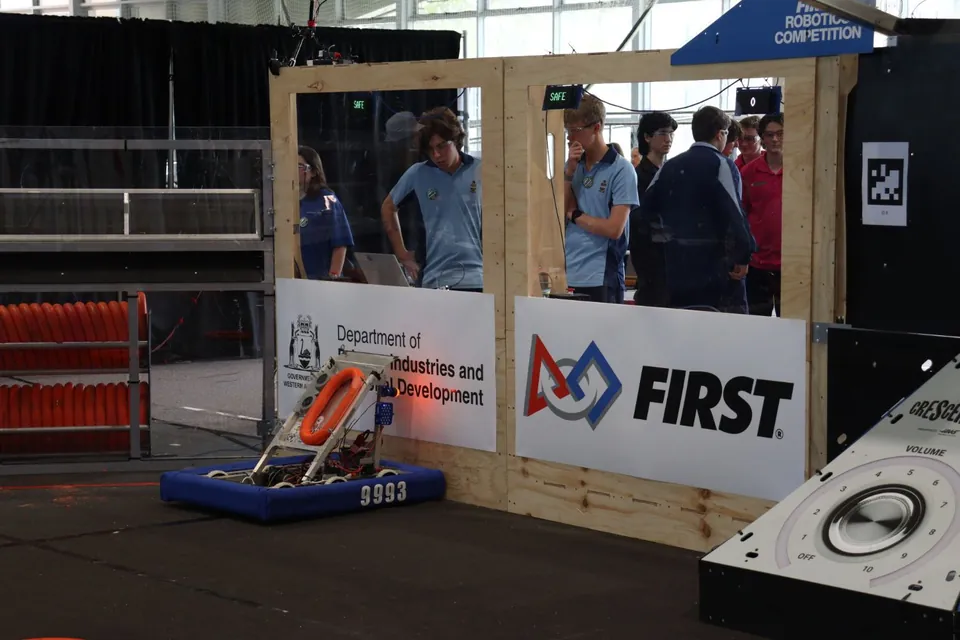
The Western Australian Robotics Playoffs, an off-season event inspired by FIRST Robotics Competition. I joined two weeks before, helped fix a dead robot, and we won the grand final 2–1.
- Event
- Western Australian Robotics Playoffs (WARP), 2024
- Result
- Won the grand final 2–1
- My part
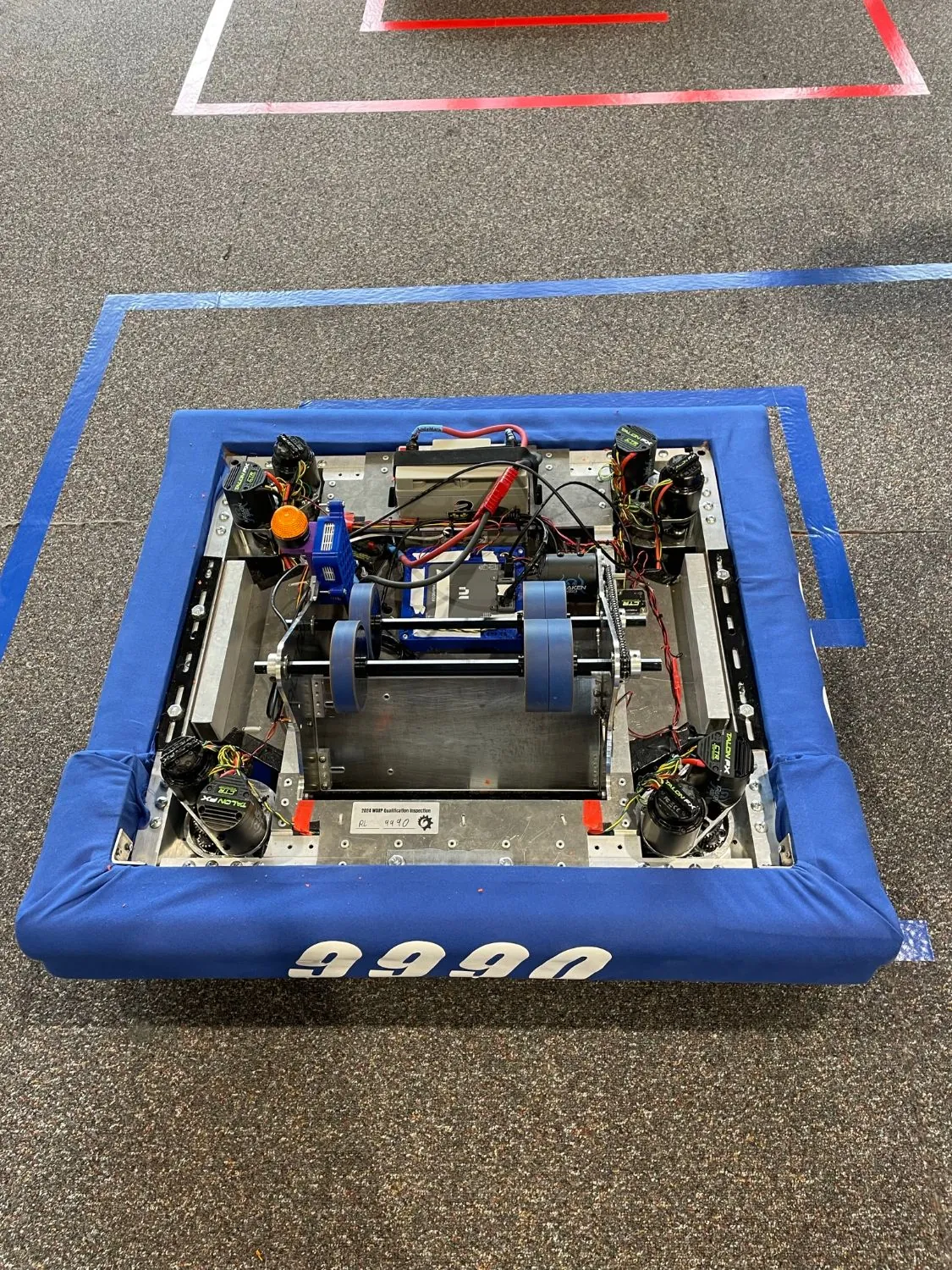
- Joined two weeks before; diagnosed the second robot's electronics
What is WARP?
The Western Australian Robotics Playoffs (WARP) is an off-season event inspired by the FIRST Robotics Competition (FRC) and tailored specifically for Western Australia. It brings together high school students for a mix of robotics and research competitions: an off-season FRC play-off, the Innovation Challenge finals, and a showcase of robotics in agriculture that highlights the future role of automation in the sector.
2024, in six steps
Joining late
I joined a couple of weeks before the competition, because I was finally able to do the club, and did my best to help prepare.
When we got there it was going smoothly. Our main robot was going second behind Curtin University, while our second bot was further back because it had a much more basic setup.
Losing control
It kept going like that until we lost control of the second bot and none of the motors worked. Everyone looked for the problem, but by nearly the end of the day nobody could find it, so everyone gave up on it.
A short-circuited Rio
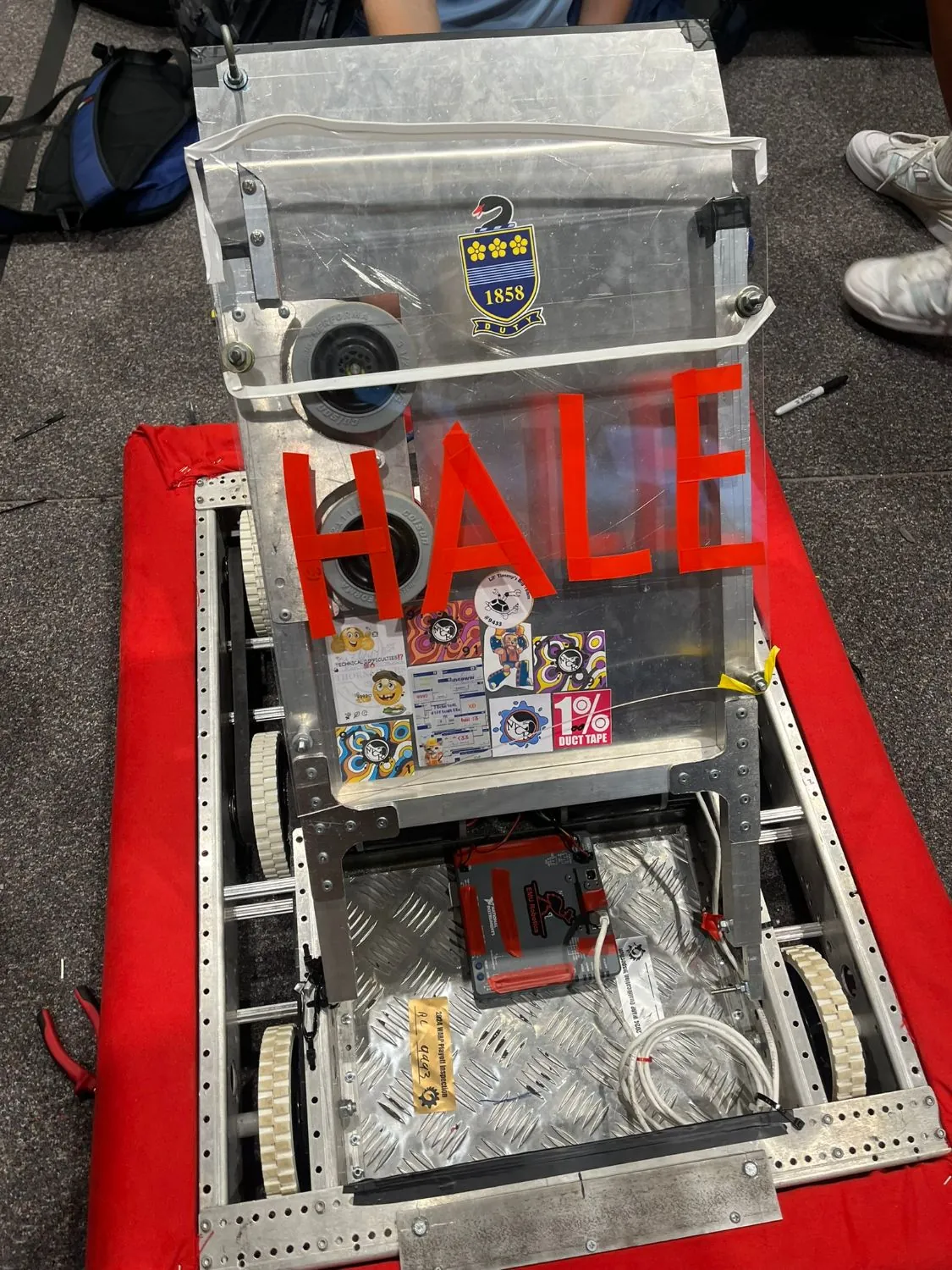
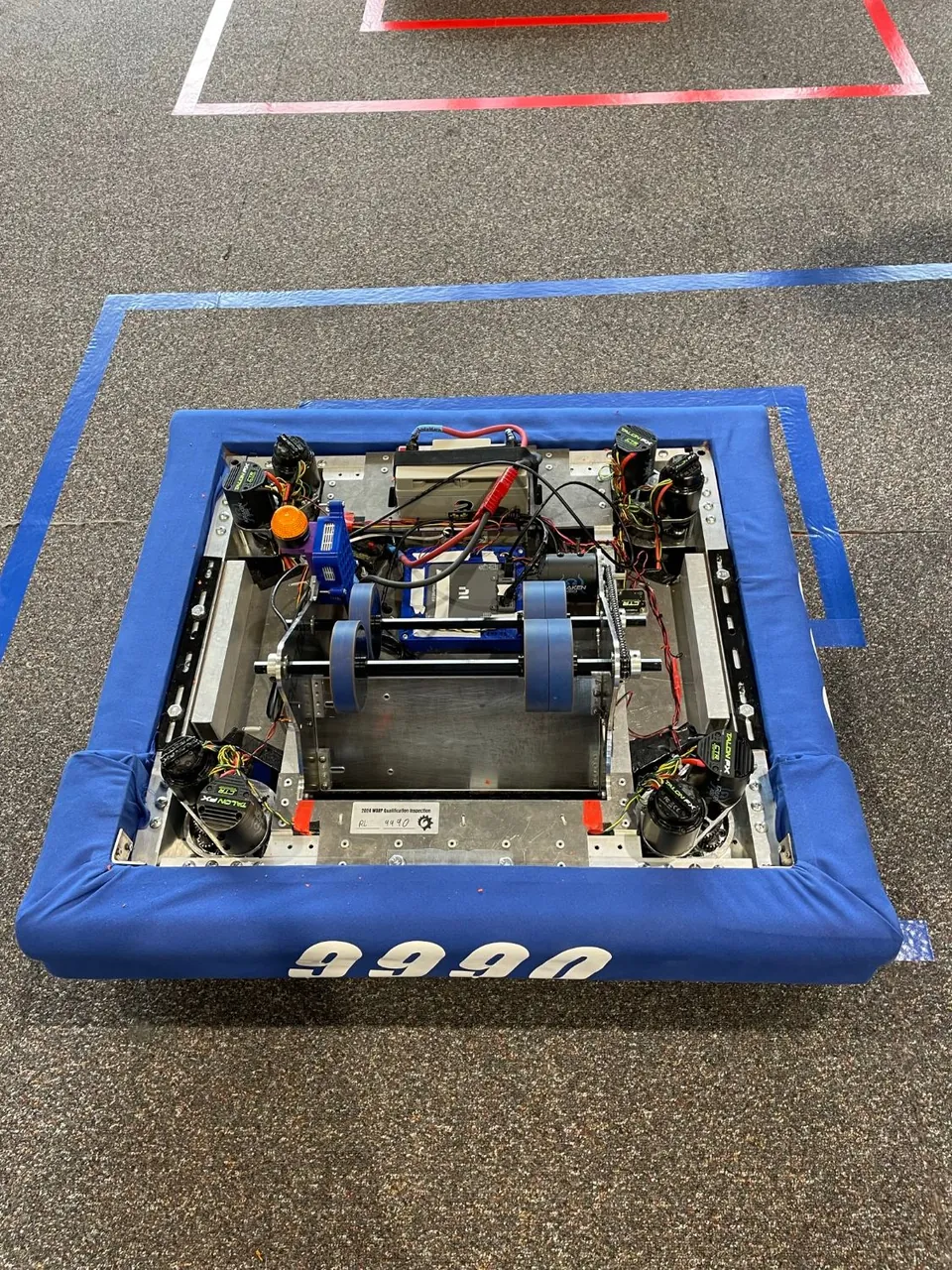
The next day I came in and pulled the second bot apart. Hale had a large team and I wasn't doing much anyway, so I took all of the parts out of the Rio and tested it. We diagnosed that the Rio had short-circuited and no longer worked properly.
After checking every other wire to make sure the short was what we thought it was, we found a little bit of shrapnel that had fallen into the PWM pins and shorted them.
The ESCs
We plugged in a new Rio and still had no control over the wheels, but we did have a connection to the Rio. The next thing to check was the ESCs. Ours flash orange if they are good and red if they aren't, but if one is red, all of them on the CAN bus are.
So I cut some of the CAN bus connections to test the ESCs one at a time and eventually found two that were dead. We had one spare, so I replaced the one on the drivetrain and didn't connect the shooter ESCs. And it worked!
Getting it all back
We then tried to get the other ESC working, and one of the Curtin volunteers opened it up to look for a fault. He couldn't find anything wrong, so I plugged it back into the CAN bus and it worked too.
We quickly put everything back together and tried to get shooting working. Unfortunately we could only get it to shoot the rings, so we only got one shot per round going into the finals.
The finals
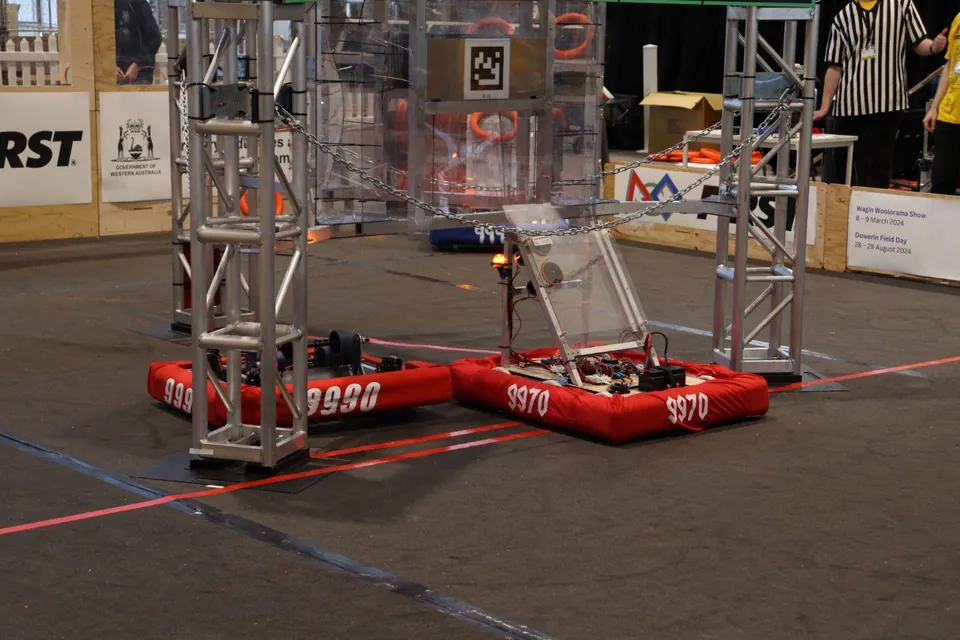
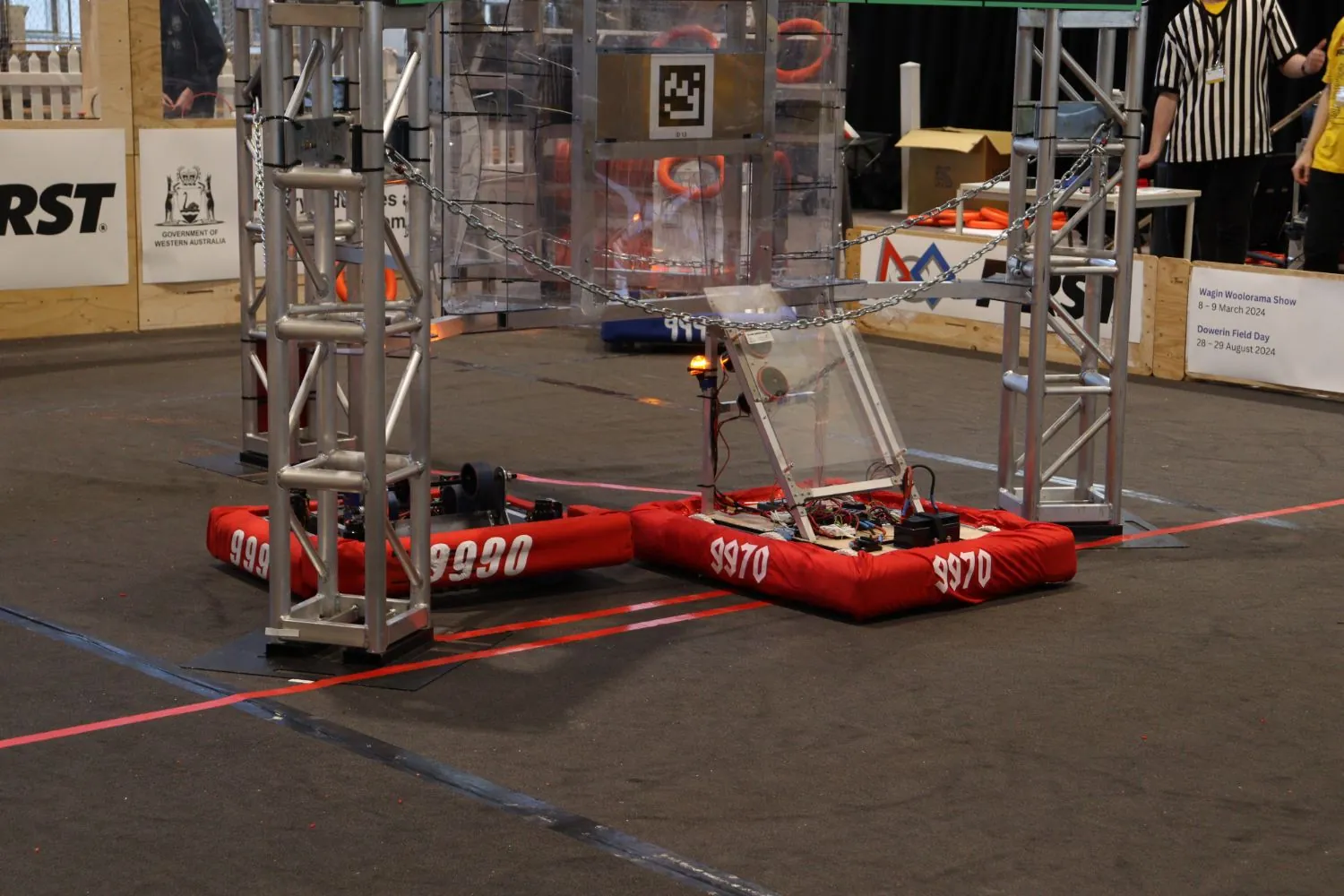
We were dead last with the second bot because we'd missed a lot of games, but luckily we were picked by Curtin and by our other team. Our coach didn't want us to shoot, so we disabled the shooter in software, added more weight to the bot, and got it inspected just before our first game of the finals.
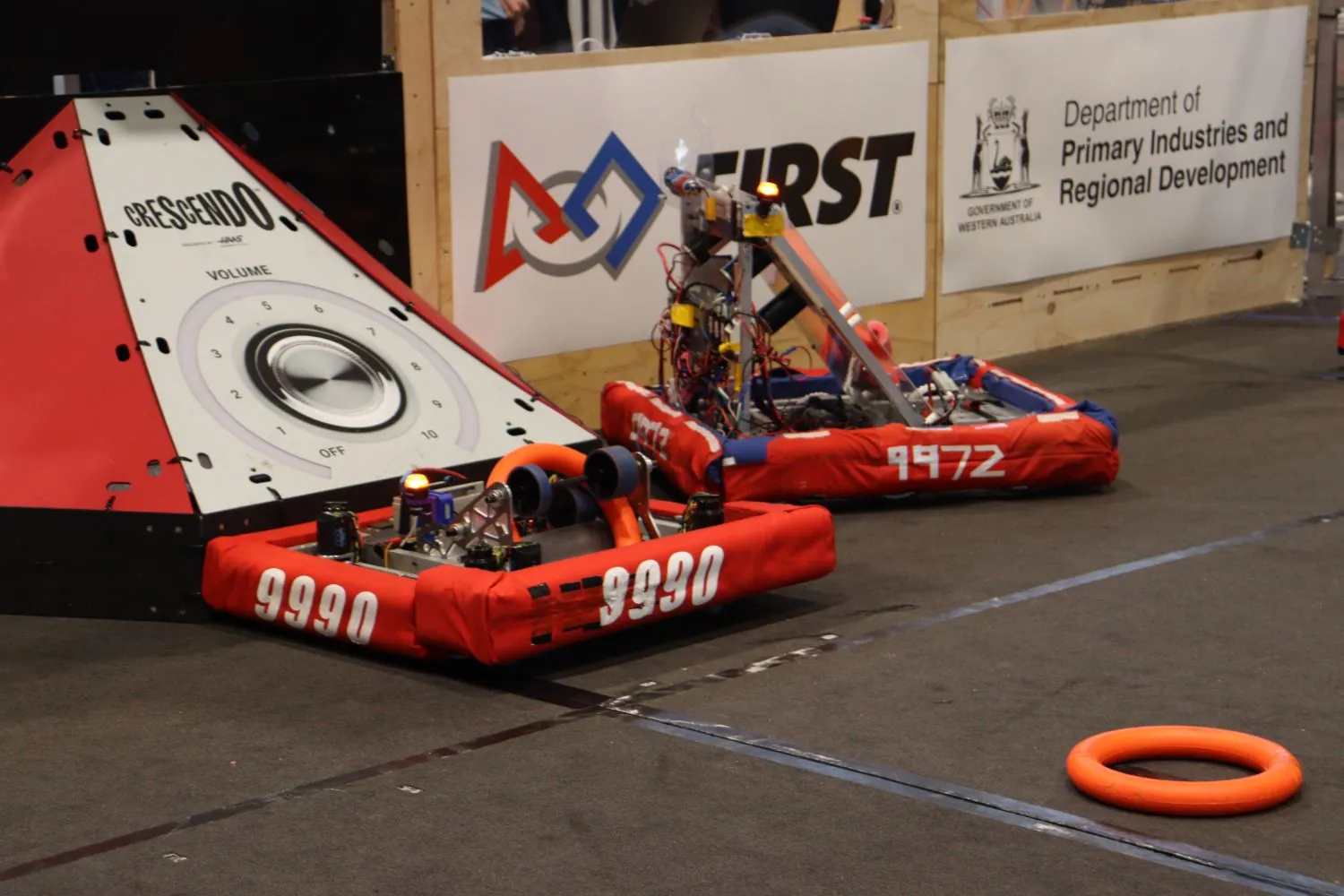
In the finals our main bot worked very well with Curtin's, our second bot did a good job defending, and we won the grand final 2–1.
More from the field